

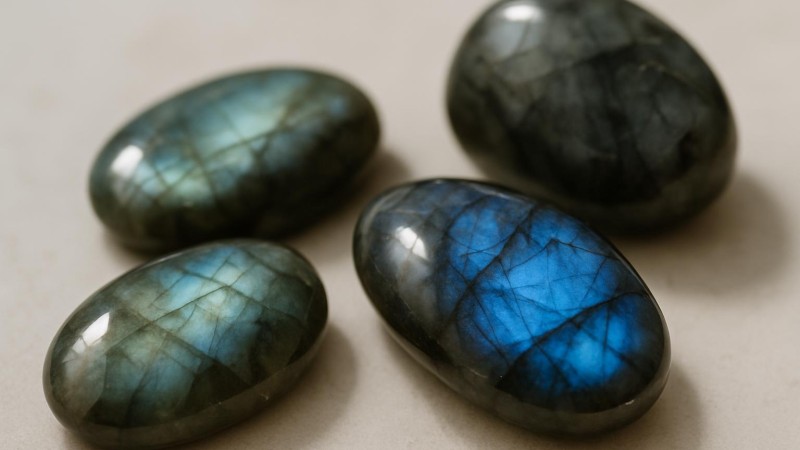
Introduction: A Gemstone That Dances with Light
Labradorite is one of nature’s most captivating stones, famed for its mesmerizing play of color known as the Schiller effect or labradorescence. When light hits its surface, flashes of blue, green, gold, and sometimes even purple appear to shimmer from within. This visual phenomenon has fascinated gem enthusiasts, jewelers, and collectors for centuries. In this article, we’ll explore what Labradorite is, how the Schiller effect works, and why this gemstone remains a favorite among artisans and spiritual seekers alike.
What Is Labradorite?
Labradorite is a feldspar mineral, part of the plagioclase series, composed primarily of sodium, calcium, aluminum, and silicate. It was first discovered in the late 18th century on the Isle of Paul, near Nain, Labrador, in Canada—hence its name. Since then, notable deposits have been found in Finland, Madagascar, Russia, and the United States.
The most striking feature of Labradorite is its optical display, known as labradorescence. This effect gives the stone an almost magical appearance, often compared to the northern lights. Because of its unique interplay of colors, Labradorite is a popular choice for jewelry designers working with wire wrappers and gemstone artisans who appreciate stones with character and depth.
The Science Behind the Schiller Effect
Understanding Labradorescence
The Schiller effect, or labradorescence, occurs due to light interference within the stone’s internal structure. Labradorite is made up of thin, alternating layers of different mineral compositions. When light enters the stone, it reflects and refracts between these layers, separating into different wavelengths. The result is a spectacular iridescent display that shifts depending on the viewing angle.
Each piece of Labradorite is unique. Some stones display vibrant blues and greens, while others feature fiery oranges, purples, or golds. The orientation of the stone during cutting plays a crucial role in maximizing this optical effect, which is why skilled lapidaries spend time studying each raw piece before shaping it into cabochons, beads, or decorative carvings.
Why It’s Called the Schiller Effect
“Schiller” is a German word meaning shimmer or play of color. In gemology, it refers to the metallic-like sheen seen in certain minerals. In Labradorite, this effect is so distinctive that it has its own name—labradorescence. This phenomenon is similar to what is seen in moonstone or sunstone, both of which also belong to the feldspar family.
Types and Varieties of Labradorite
- Standard Labradorite: Characterized by blue and green flashes, this variety is the most common and widely used in jewelry.
- Spectrolite: A rare and high-quality variety from Finland that displays a full spectrum of colors with exceptional vibrancy.
- Golden Labradorite: Found mainly in Madagascar, this version has a warm, golden sheen rather than the typical cooler tones.
- Black Labradorite: Dark and mysterious, this type has a smoky base color with subtle iridescent flashes.
Each type of Labradorite offers its own mood and aesthetic, making it a versatile choice for everything from amethyst beads combinations to bold statement pendants.
How to Identify Genuine Labradorite
Because of its popularity, Labradorite is sometimes imitated by glass or synthetic materials. To identify genuine Labradorite:
- Look for the play of color—authentic stones display natural flashes that shift with movement.
- Check the base color—real Labradorite often has a grayish or smoky background.
- Examine the surface—tiny inclusions or layers are normal and indicate authenticity.
- Perform a hardness test—Labradorite ranks around 6 to 6.5 on the Mohs scale.
When purchasing Labradorite beads or cabochons from reputable suppliers like PebbleBead, you can be confident that each piece is ethically sourced and carefully selected for its natural beauty.
Traditional and Folklore Associations
Throughout history, Labradorite has been surrounded by mystical stories. In Inuit folklore, it was believed that the northern lights were trapped within the stone, and a warrior freed them with a mighty strike of his spear—explaining the flashes of color that remain inside the gem.
In metaphysical traditions, Labradorite is often referred to as a “stone of transformation.” It is traditionally believed to enhance intuition, stimulate imagination, and protect against negative energies. Ancient cultures regarded it as a spiritual companion for those undergoing change or seeking inspiration. Although these beliefs are symbolic rather than scientific, they continue to make Labradorite a cherished stone in meditation and energy work practices.
Uses of Labradorite in Jewelry
Design Versatility
Labradorite’s color play makes it a striking choice for all types of jewelry, from dainty earrings to bold statement necklaces. Designers often pair Labradorite with neutral metals such as sterling silver or white gold to highlight its cool tones. It also pairs beautifully with complementary materials like freshwater pearls or other semi-precious stones to create contrast and harmony.
For those who enjoy making their own jewelry, Labradorite beads are available in numerous shapes and sizes—rounds, faceted cuts, and freeform nuggets. When combined with simple findings such as jump rings, clasps, and spacer beads, Labradorite can elevate even the most minimalistic design.
Care and Maintenance Tips
While Labradorite is durable enough for everyday wear, it should be treated with care to preserve its luster and labradorescence. Here are some tips:
- Avoid harsh chemicals or ultrasonic cleaners—use mild soap and warm water instead.
- Store Labradorite jewelry separately to prevent scratches.
- Keep away from extreme temperature changes, which can cause cracks.
- Polish gently with a soft cloth to maintain its glow.
Collecting and Displaying Labradorite
Beyond jewelry, Labradorite is also prized by mineral collectors and interior designers. Polished slabs or spheres make stunning display pieces that catch and reflect light beautifully. When placed near a window or under soft lighting, the stone’s shifting colors bring a sense of wonder to any space.
For artisans, Labradorite offers endless creative potential. Its unpredictable flashes make each piece unique—no two stones are ever the same. Whether you’re crafting beaded bracelets, setting cabochons, or experimenting with wire wrappers, Labradorite offers a blend of natural beauty and artistic inspiration.
Interesting Facts About Labradorite
- The name “Labradorite” comes from the region of its discovery, Labrador, Canada.
- Some Labradorite specimens show “twinning,” a crystal phenomenon that enhances its optical effects.
- It’s considered the sister stone of Moonstone, both belonging to the feldspar family.
- Finland’s Spectrolite variety is so vivid that it’s often used in luxury design projects, including furniture inlays.
Why Labradorite Continues to Captivate
Labradorite’s enduring appeal lies in its combination of natural science and mystical beauty. It bridges the gap between geology and imagination—between the physical and the symbolic. Whether you’re drawn to its shimmering colors or its folkloric associations, this gemstone offers something for everyone.
For jewelry makers, Labradorite provides endless design possibilities. For collectors, it offers a glimpse into Earth’s artistry. And for those who appreciate symbolic meaning, it serves as a reminder that transformation and light can emerge from within.
Conclusion: Embracing the Light Within
Labradorite is more than just a gemstone—it’s a celebration of nature’s ability to surprise and inspire. Its Schiller effect, born from intricate mineral layers, transforms a simple stone into a dynamic display of color and light. Whether you wear it as a pendant, craft it into a beaded necklace, or keep it as part of your mineral collection, Labradorite invites you to appreciate the magic hidden in everyday materials.
At PebbleBead, we share that appreciation by offering high-quality natural stones, beads, and supplies for jewelry makers who value authenticity and craftsmanship. Explore Labradorite and other beautiful materials to create pieces that reflect both artistry and nature’s brilliance.
For the complete picture, read our in-depth guide:

Leave a Comment