

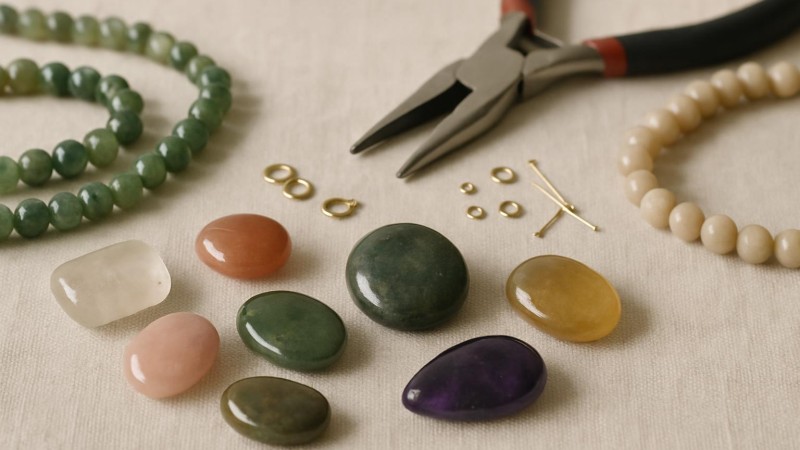
Gemstones have always invited a rare combination of curiosity, craftsmanship, and wonder. A single bead can carry the evidence of geological pressure, ancient trade routes, regional artistry, and personal meaning, all while becoming the focal point of a necklace, bracelet, or pair of earrings. For jewelry makers, collectors, and thoughtful gift-givers, learning the language of gemstones is the difference between choosing a pretty material and understanding the story, durability, value, and design potential behind it. That is why a true gemstone encyclopedia needs to go beyond color charts and short definitions.
This ultimate guide brings together the essential knowledge behind natural stone jewelry and beading supplies: how gemstones form, how they are classified, what affects quality, why treatments matter, and how to choose stones for designs that are beautiful and wearable. You will also find practical guidance on bead shapes, findings, stringing materials, gemstone care, and the common mistakes that can shorten the life of a handmade piece. Whether you are comparing gemstone beads for a new collection or trying to identify the stone in a vintage pendant, the goal is to help you make confident, informed decisions.
Gemstones are also cultural objects. Many stones have been treasured in folklore, spiritual tradition, royal ornament, and ceremonial jewelry for thousands of years. This guide discusses those traditional meanings with care, framing them as historical belief rather than medical fact. Scientific gemology and cultural symbolism can coexist: one explains the mineral, the other explains why people have loved it.
Use this pillar as your reference point whenever a gemstone question appears. It is designed to support beginners learning their first stone names, experienced makers refining their materials, and shoppers who want to understand what they are buying. By the end, you will know how to read gemstone descriptions, compare quality, match stones with the right jewelry components, and care for your finished designs with confidence.
Table of Contents
- What Makes a Gemstone?
- History and Cultural Meaning of Gemstones
- Gemstone Science Basics
- Color, Clarity, Cut, and Optical Phenomena
- Natural, Treated, and Synthetic Stones
- Major Gemstone Families and Popular Varieties
- Gemstone Beads, Shapes, and Cuts for Jewelry Making
- Designing with Gemstones in Jewelry
- Identification, Quality, and Responsible Sourcing
- Gemstone Care, Storage, and Safety
- Frequently Asked Questions
- Conclusion
What Makes a Gemstone?
A gemstone is generally a mineral, rock, or organic material that is valued for beauty, rarity, durability, and suitability for ornament. Most gemstones begin deep within the Earth, where heat, pressure, fluids, and time create crystalline structures with distinctive colors and properties. Diamonds, sapphires, garnets, quartz, and tourmalines are minerals because they have orderly internal structures and defined chemical compositions. Others, such as lapis lazuli and jasper, are rocks made from more than one mineral. Pearls, amber, coral, and shell are organic gems because they come from living or once-living sources.
Beauty, rarity, and durability
Gem quality is not determined by beauty alone. A stone must also be durable enough for its intended use, especially if it will be worn frequently. Durability includes hardness, toughness, cleavage, porosity, and resistance to chemicals or heat. A gemstone may be hard but brittle, or soft but surprisingly wearable when used in the right setting. This is why a ring stone is judged differently from a pendant stone, and why bead jewelry often balances visual impact with practical wear.
Rarity can also be complex. Some gem materials are geologically rare, while others are abundant but difficult to find in clean, attractive, or evenly colored pieces. Amethyst, for example, is widely available compared with fine emerald, yet well-cut, deeply saturated amethyst can still be prized. In jewelry making, a stone does not need to be rare to be valuable to a design; it needs the right color, shape, finish, and emotional resonance.
Minerals, rocks, and organic gems
Understanding the difference between mineral, rock, and organic gem helps you read descriptions more accurately. Quartz is a mineral family that includes clear quartz, amethyst, citrine, smoky quartz, and rose quartz. Chalcedony is a microcrystalline quartz group that includes agate, onyx, carnelian, and many jaspers. Lapis lazuli is a rock dominated by lazurite, often with calcite and pyrite. Pearl forms inside mollusks, while amber is fossilized tree resin.
Some materials used in jewelry are not gemstones in the strict geological sense, yet they belong in a practical gemstone encyclopedia because makers use them in similar ways. These include shell beads, mother-of-pearl, glass imitations, and stabilized natural materials. A designer may combine a carved pendant with quartz points or use organic accents beside polished stone rounds. The important thing is honest labeling and suitable construction.
Precious versus semi-precious
The old division between precious and semi-precious stones can be misleading. Traditionally, diamond, ruby, sapphire, and emerald were called precious, while nearly everything else was grouped as semi-precious. Modern gemology uses more specific language because many so-called semi-precious stones can be rare, costly, or culturally important. Fine alexandrite, spinel, jadeite, opal, and demantoid garnet are excellent examples.
For jewelry makers, the more useful question is not whether a stone is precious, but whether it fits the design and use. How hard is it? Will it scratch easily? Is the color stable? Does it have drill holes clean enough for stringing? Can it handle daily wear or should it be saved for occasional pieces? These practical questions turn gemstone knowledge into better buying and better jewelry.
History and Cultural Meaning of Gemstones
Gemstones have traveled with humanity for as long as people have adorned themselves. Archaeological finds show beads made from shell, bone, amber, turquoise, carnelian, lapis lazuli, and other materials thousands of years old. Early gems were not only decorative; they signaled trade connections, rank, protection, identity, and ritual belonging. A polished bead could cross deserts, oceans, and empires before being worn close to the body.
Ancient trade and royal adornment
In ancient Egypt, lapis lazuli from Afghanistan was prized for its deep celestial blue, while carnelian and turquoise appeared in amulets and funerary ornaments. Mesopotamian cylinder seals used stones such as agate, hematite, and lapis as both administrative tools and personal objects. In Rome, intaglios and cameos allowed gems to function as signatures, portraits, and symbols of status. Across Asia, jade was carved into ritual objects and ornaments, admired for its toughness and luminous surface.
Trade routes made gemstones global long before modern jewelry supply chains existed. Garnets moved through Europe and Asia; pearls were harvested in the Persian Gulf and Indian Ocean; turquoise appeared in Indigenous jewelry traditions across the American Southwest and in ancient Persian ornament. When makers work with turquoise beads today, they are touching a material with an unusually wide cultural footprint. That history makes accurate naming and respect for origin especially important.
Folklore, symbolism, and birthstones
Gemstone meaning has always varied by culture and period. In folklore, amethyst was associated with clear thought and moderation, while garnet was regarded as a traveler stone in some traditions. Moonstone has long been connected with lunar imagery, cycles, and feminine symbolism in various cultural contexts. Jade has been associated with virtue, harmony, and protection in Chinese tradition. These meanings are historical and symbolic, not medical claims.
Birthstone lists are another example of meaning shaped by culture. The modern Western birthstone chart was standardized in the twentieth century, but the idea of linking stones with months has older roots in religious, astrological, and ceremonial systems. Birthstones can be a helpful design framework because customers often connect with them personally. However, makers should remember that alternative lists exist, and many people choose stones based on color, memory, or symbolism rather than birth month alone.
Gemstones as personal storytelling
In contemporary jewelry, gemstones often work as storytelling materials. A bracelet might combine a wedding color palette, a favorite landscape, and stones traditionally believed to represent courage or calm. A pendant might be chosen because it resembles sea glass, a mountain range, or the night sky. Even when buyers do not know the geology, they respond to color, texture, and perceived mood.
This emotional dimension is one reason natural stones remain popular in a world filled with mass-produced accessories. No two agates or jaspers are exactly the same. Inclusions, veining, cloudy zones, and color variation become part of the charm. The best gemstone jewelry does not erase nature; it frames it, balances it, and turns it into something wearable.
Gemstone Science Basics
Gemology may sound technical, but its basic concepts are extremely useful for anyone buying or making jewelry. A gemstone description is really a condensed scientific profile: mineral family, color, hardness, origin, treatment, shape, size, and quality. Once you understand the main terms, listings become easier to compare and confusing claims become easier to question. Science does not remove the romance of gemstones; it gives you a clearer way to appreciate them.
Chemical composition and crystal structure
Each mineral gemstone has a chemical composition and an internal arrangement of atoms. Corundum, the mineral family that includes ruby and sapphire, is aluminum oxide. Beryl includes emerald and aquamarine and is a beryllium aluminum silicate. Quartz is silicon dioxide. Trace elements can create dramatic changes in color: chromium can make corundum red as ruby, while iron and titanium can contribute to blue sapphire.
Crystal structure affects how a gem grows, breaks, reflects light, and accepts cutting. Some minerals form hexagonal crystals, others cubic, orthorhombic, monoclinic, or trigonal structures. In bead making, the original crystal shape is often removed during cutting and polishing, but structure still matters. It can influence cleavage, directional color, and how a stone behaves when drilled or shaped.
Hardness, toughness, and cleavage
The Mohs scale ranks scratch resistance from 1 to 10, with talc at 1 and diamond at 10. Quartz is 7, feldspar around 6 to 6.5, apatite 5, and fluorite 4. This scale is relative, not linear; diamond is far harder than corundum even though they are only one number apart. A higher Mohs rating generally helps a stone resist surface wear, but it does not guarantee toughness.
Toughness describes resistance to breaking, chipping, or cracking. Jade is famously tough, even though it is not as hard as sapphire. Topaz is relatively hard but has perfect cleavage, meaning it can split in certain directions if struck. For makers, this distinction matters when selecting stones for bracelets, rings, and designs that may receive impact. Delicate stones can still be used beautifully in earrings or pendants where abrasion is lower.
Density, luster, and refractive index
Gemstones also differ in density, luster, and how they bend light. Hematite feels heavy for its size because of its high specific gravity, while amber feels light. Luster describes how a surface reflects light, such as vitreous, waxy, silky, metallic, pearly, or greasy. Refractive index helps gemologists identify stones because each material bends light in characteristic ways.
Even without laboratory tools, these properties influence the look and feel of jewelry. A strand of agate beads may feel cool and substantial, with a smooth waxy-to-vitreous polish. Freshwater pearl has a soft, layered luster that behaves differently from faceted quartz. Hematite adds visual weight and mirror-like reflectivity. Good design often begins with noticing these physical differences.
Why gem science matters to makers
Knowing science helps you prevent mismatches. A soft stone next to a sharp-edged metal component may wear faster. Porous stones can absorb oils, dyes, or cleaning chemicals. Heat-sensitive gems should not be exposed to torch work or ultrasonic cleaning. Stones with natural fractures may need gentler stringing and protective settings.
Scientific knowledge also improves communication. When a customer asks whether a stone is natural, dyed, stabilized, or heat treated, a confident explanation builds trust. You do not need to become a laboratory gemologist to make better jewelry, but learning the vocabulary helps you choose materials with intention.
Color, Clarity, Cut, and Optical Phenomena
Color is usually the first thing people notice about a gemstone, but it is only one part of visual quality. Clarity, transparency, cut, polish, pattern, and optical effects all contribute to how a stone performs in jewelry. Unlike diamonds, colored stones are rarely judged by one universal grading system. A rich, even color might be ideal for one gem, while dramatic inclusions or banding may be the reason another stone is desirable.
Understanding hue, tone, and saturation
Hue is the basic color family, such as blue, green, red, yellow, purple, or orange. Tone describes lightness or darkness, ranging from very pale to very dark. Saturation describes intensity or purity of color. A vivid medium-toned blue sapphire may appear lively, while an overly dark stone can look black in low light. A pale aquamarine may be delicate and elegant, even if it is less saturated than a deeper blue specimen.
Lighting dramatically affects gemstone color. Daylight, warm indoor bulbs, cool LEDs, and candlelight can all shift appearance. Some stones, such as alexandrite and certain garnets, are famous for color change. Others simply look better under certain light temperatures. Jewelry makers should inspect strands in more than one lighting condition, especially when matching beads for a symmetrical design.
Clarity, inclusions, and character
Clarity refers to internal and surface features, including crystals, fractures, needles, clouds, growth lines, and cavities. In transparent faceted stones, high clarity is often desirable because it allows light to move freely. In opaque and translucent stones, inclusions may create pattern and personality. Moss agate, rutilated quartz, garden quartz, and dendritic opal are valued precisely because of visible internal worlds.
In bead jewelry, clarity expectations depend on material. A flawless-looking strand of opaque jasper is not judged the same way as a faceted aquamarine briolette. Natural inclusions should not be confused with damage, but cracks that threaten durability are different from stable internal features. When buying stones, look for chips around drill holes, sharp fissures, and weak spots that could worsen during stringing.
Cut, polish, and light return
Cut determines shape, symmetry, proportions, and surface finish. Faceted stones use angled surfaces to reflect light and create sparkle. Cabochons use smooth domed surfaces to emphasize color, pattern, translucency, or optical effects. Beads may be round, oval, coin, tube, cube, nugget, rondelle, heishi, chip, barrel, teardrop, or freeform. A good polish makes color clearer and the surface more pleasant against the skin.
For stones such as moonstone beads, cut can determine whether the desired glow appears clearly. If the orientation is poor, the famous blue or white sheen may be weak. Cat's-eye and star stones must also be oriented correctly to show a sharp line or star. This is why two stones of the same material can vary dramatically in appeal.
Special optical phenomena
Some gemstones are prized for unusual optical effects. Adularescence is the floating glow seen in moonstone. Labradorescence is the colorful flash of labradorite. Asterism creates star patterns in stones such as star sapphire. Chatoyancy creates a cat's-eye band, as seen in tiger eye and certain chrysoberyls. Play-of-color is the shifting rainbow effect in precious opal.
These phenomena are not defects; they are caused by internal structure, inclusions, layers, or light interference. The best designs showcase them with movement and contrast. A labradorite pendant may look quiet until it turns, then flash blue or green. A strand of tiger eye comes alive when beads rotate in the light. Understanding these effects helps you design jewelry that rewards attention.
Natural, Treated, and Synthetic Stones
One of the most important parts of any gemstone encyclopedia is understanding what words such as natural, treated, enhanced, stabilized, lab-created, simulated, and imitation actually mean. These terms are sometimes used carelessly, but they have real significance for value, care, and trust. A treated stone is not automatically bad, and a synthetic stone is not automatically fake. The key is disclosure and suitability for the intended jewelry.
Natural stones and accepted treatments
A natural gemstone formed in the Earth without human creation, but it may still be cut, polished, drilled, and sometimes treated. Heat treatment is common for stones such as sapphire, ruby, aquamarine, tanzanite, citrine, and some amethyst. Heating can improve color or clarity and is widely accepted when disclosed. Many commercial citrines on the market began as amethyst or smoky quartz that was heated to produce golden tones.
Dyeing is common in porous or patterned stones such as agate, howlite, jade-like materials, and some quartz. Stabilization uses resin or similar substances to strengthen porous stones, especially turquoise and certain softer materials. Waxing and oiling may improve surface appearance. These treatments can be practical, but they may affect cleaning, color stability, and long-term behavior.
Synthetic, simulated, and imitation gems
A synthetic gemstone has the same essential chemical composition and structure as its natural counterpart but is grown in a laboratory. Synthetic sapphire, ruby, emerald, spinel, and quartz are common examples. They can be beautiful and durable, but they should not be represented as mined natural stones. A simulated gem merely looks like another material; for example, blue glass can simulate aquamarine, and dyed howlite can simulate turquoise.
Imitation materials have a place in fashion jewelry when accurately labeled. Problems arise when they are sold under misleading names. Terms such as reconstituted, composite, created, faux, and imitation deserve attention. If a listing seems vague, ask what the material actually is. A trustworthy supplier should be able to distinguish natural amethyst beads from dyed quartz, glass, or synthetic material.
Common treatments in bead jewelry
Bead strands often include treated materials because color consistency and affordability are important in jewelry making. Dyed agate can offer bright colors not common in nature. Stabilized turquoise is often stronger than fragile untreated material. Coated hematite or quartz can create metallic or iridescent finishes. Color-enhanced stones can be excellent design materials if the maker understands their limits.
Common mistakes include soaking dyed stones, using harsh chemicals, or assuming every bright color is natural. Some dyes can fade in sunlight or transfer when exposed to moisture. Coatings may scratch or wear at high-contact points. When designing jewelry for everyday use, test questionable stones with a soft damp cloth and avoid pairing delicate coatings with abrasive components.
Why disclosure builds trust
Customers do not necessarily reject treated stones; they reject confusion. Clear descriptions help people make informed choices based on beauty, budget, durability, and personal values. If a stone is dyed, stabilized, heat treated, or lab-created, say so when you know. If treatment status is unknown, avoid overclaiming.
Transparency is especially important when stones carry cultural or symbolic meaning. A buyer seeking natural turquoise may feel differently about dyed howlite, even if the color is similar. Honest terminology protects both maker and customer, and it raises the quality of the jewelry community as a whole.
Major Gemstone Families and Popular Varieties
A complete gemstone encyclopedia could fill many volumes, but jewelry makers benefit from understanding the major families they encounter most often. Gemstone names often belong to groups rather than isolated materials, and learning those groups makes identification easier. Quartz, feldspar, garnet, beryl, corundum, opal, jade, and chalcedony each include multiple varieties with different appearances and uses. This section is a practical field guide to the names you are most likely to see in bead and jewelry supply catalogs.
Quartz and chalcedony
Quartz is one of the most important jewelry minerals because it is attractive, versatile, and widely available. Clear quartz, rose quartz, smoky quartz, amethyst, citrine, and prasiolite are macrocrystalline varieties. Chalcedony is microcrystalline quartz and includes agate, onyx, carnelian, chrysoprase, bloodstone, and many jaspers. Quartz is generally 7 on the Mohs scale, making it more durable than many softer decorative stones.
Agate is famous for banding, translucency, and dramatic dye potential. Carnelian ranges from orange to reddish brown and has been used in seals, beads, and amulets for millennia. Chrysoprase is apple-green chalcedony colored by nickel. Jasper is opaque and often patterned with earthy colors, scenic markings, or brecciated textures. Designers love jasper beads because they can anchor palettes with landscape-like depth.
Feldspar, garnet, and beryl
The feldspar group includes moonstone, labradorite, sunstone, and amazonite. These stones often display sheen, flash, or soft color rather than diamond-like brilliance. Labradorite is valued for blue, green, gold, or multicolor labradorescence, while sunstone may show glittery aventurescence from tiny plate-like inclusions. Amazonite offers opaque blue-green tones that work beautifully in bohemian and coastal designs.
Garnet is not a single stone but a group that includes almandine, pyrope, spessartine, grossular, and andradite varieties. Red garnets are the most familiar, but garnet can also be orange, green, purple, brown, and color-change. garnet beads bring richness to winter palettes, historical designs, and pieces inspired by antique jewelry. Beryl includes emerald, aquamarine, morganite, heliodor, and goshenite, with color differences caused by trace elements.
Corundum, opal, turquoise, and lapis
Corundum includes ruby and sapphire. Ruby is red corundum, while sapphire includes blue and many fancy colors such as pink, yellow, green, and violet. Corundum is 9 on the Mohs scale, making it excellent for rings and high-wear jewelry, though quality and treatment vary widely. In bead form, ruby and sapphire are often opaque or translucent rather than transparent gem-grade crystals.
Opal is hydrated silica known for play-of-color in precious opal and soft body colors in common opal. It can be sensitive to heat, dehydration, and impact, so it requires thoughtful care. Turquoise is a phosphate mineral prized for blue to green color and matrix patterns, often stabilized for strength. Lapis lazuli is a rich blue rock used since antiquity, and lapis beads may show golden pyrite flecks or white calcite patches.
Tourmaline, jade, pearls, and organics
Tourmaline is beloved for its wide color range, including pink, green, blue, black, and multicolor watermelon crystals. tourmaline beads can create subtle ombre strands or bright mixed-color designs. Jade refers mainly to jadeite and nephrite, two different materials prized for toughness and cultural significance. Jadeite can occur in vivid green, lavender, white, yellow, black, and other colors, while nephrite often appears creamy, green, brown, or black.
Organic gems include pearl, amber, coral, jet, shell, and mother-of-pearl. They require special care because they are usually softer and more sensitive than mineral gems. Pearls are loved for luster rather than sparkle, while amber offers warmth and low weight. These materials expand gemstone design beyond minerals and remind us that beauty can come from both geology and biology.
Gemstone Beads, Shapes, and Cuts for Jewelry Making
Gemstone beads translate rough mineral material into repeatable design components. The shape, size, hole placement, finish, and consistency of a bead strand determine how it will drape, sparkle, and survive wear. Two strands made from the same stone can behave very differently if one is faceted rondelles and the other is matte nuggets. Choosing the right bead is both an aesthetic and engineering decision.
Common bead shapes and their uses
Round beads are the most versatile because they string smoothly, distribute tension evenly, and work in both classic and modern designs. Rondelles add rhythm and sparkle, especially when faceted. Ovals and barrels elongate a design, while coins and discs create surface area and pattern. Tubes, heishi, cubes, nuggets, chips, and freeforms each bring a different mood, from refined geometry to organic texture.
Pearls deserve separate attention because their shapes carry strong style signals. Round pearls feel formal and timeless, while rice, button, coin, and baroque shapes feel more relaxed or sculptural. freshwater pearls combine beautifully with faceted stones because their soft luster balances sparkle. The slight irregularity of natural pearl shapes can make handmade jewelry feel personal rather than machine-perfect.
Faceted, smooth, matte, and carved finishes
A smooth polished bead emphasizes color, pattern, and touch. A faceted bead adds movement and light reflection, making even dark stones appear lively. Matte finishes soften color and create a contemporary, earthy appearance. Carved beads, floral shapes, leaf forms, skulls, animals, and symbolic motifs add narrative detail, but they can be more fragile around protruding areas.
Finish should match the design's purpose. A matte bracelet may feel understated and wearable, while a faceted necklace can catch light for evening wear. lava beads are porous and textural, often used in casual or aromatherapy-inspired designs, though scent use should be described as personal preference rather than therapeutic claim. Highly polished hematite, by contrast, gives a sleek metallic look without using traditional metal beads.
Drill holes, sizing, and strand consistency
Drill holes are easy to overlook until a project fails. Holes may be centered, top-drilled, side-drilled, half-drilled, or irregular. Tiny holes limit cord and wire choices, while rough holes can fray thread. Beads with sharp edges around the hole may require bead caps, knotting, or more durable stringing material. Always test your cord before committing to a design.
Size consistency matters for patterns. Machine-cut calibrated beads are easier for symmetrical work, bead weaving, and multi-strand designs. Hand-cut beads may have more charm but require flexibility. When mixing stones, measure hole size as well as bead diameter. A 6 mm round gemstone and a 6 mm metal spacer may not align visually if one has a larger hole, different polish, or stronger color weight.
Accent beads and transitions
Accent beads help stones communicate with findings and focal elements. Metal spacers can separate similar colors, prevent abrasion, and add rhythm. silver spacers are especially useful when a design needs brightness without overwhelming the stones. Seed beads, crystal accents, wood, shell, and ceramic components can also shift a gemstone strand toward casual, elegant, rustic, or ceremonial styles.
Good bead design often depends on transitions. A large focal pendant may need graduated beads so the necklace does not look abrupt. A bracelet with heavy stones may need smaller accents near the clasp for comfort. Earrings require attention to weight, balance, and movement. The shape of each bead is not just decoration; it is part of the structure.
Designing with Gemstones in Jewelry
Designing with gemstones means balancing color, symbolism, durability, scale, texture, and construction. A beautiful stone can still become an uncomfortable bracelet, an unbalanced necklace, or a pair of earrings too heavy to wear. The best designs begin with both inspiration and practical planning. Think of gemstones as collaborators: each one has strengths, limitations, and a visual personality.
Color palettes and contrast
Gemstone palettes can be monochromatic, analogous, complementary, seasonal, or story-driven. A monochromatic palette might use several shades of blue, such as aquamarine, lapis, sodalite, and blue lace agate. An analogous palette could combine green aventurine, prehnite, peridot, and moss agate. Complementary designs create energy, such as turquoise with coral-colored stones or amethyst with citrine tones.
Contrast is not only about color. It can involve transparency, finish, shape, and size. Matte black onyx beside glossy gold findings feels different from black spinel faceted with bright sterling elements. Patterned stones need breathing room, while plain stones can handle more ornate metalwork. If every component competes for attention, the eye has nowhere to rest.
Durability by jewelry type
Rings and bracelets receive the most wear because they strike surfaces, rub against clothing, and encounter water more often. Necklaces and earrings are usually safer places for softer or more delicate stones. If you use porous or fragile gems in a bracelet, protect them with thoughtful spacing and avoid designs that encourage constant impact. For high-movement pieces, secure construction is as important as the stone itself.
Stringing choices also affect durability. Flexible wire is common for beaded necklaces and bracelets because it resists stretching and supports weight. Silk or nylon cord works well for knotting pearls and certain beads. Elastic can be convenient for stretch bracelets but must be matched carefully to bead weight and hole edges. bead cord should be chosen for diameter, strength, flexibility, and compatibility with the bead holes.
Findings, metals, and structure
Findings are the hidden architecture of jewelry. Clasps, crimps, ear wires, bead caps, head pins, eye pins, bails, and connectors determine whether a design functions well. jump rings should be strong enough for the piece and closed cleanly so thread or chain cannot slip out. Heavy gemstone necklaces need clasps that feel secure and proportionate. Earrings need components that keep weight manageable and movement smooth.
Metal color changes the mood of gemstones. Sterling silver can cool down bright stones and sharpen blues, greens, and purples. Gold-filled or brass tones warm up garnet, carnelian, citrine, tiger eye, and smoky quartz. Copper enhances earthy palettes and pairs beautifully with turquoise, jasper, and green stones. sterling clasps often suit designs where long-term wear and a refined finish are priorities.
Symbolic and intentional designs
Many customers enjoy gemstone symbolism, especially for gifts, birthstones, memorial pieces, and milestone jewelry. When discussing meaning, use language such as traditionally associated with, in folklore, or historically regarded as. For example, rose quartz has been traditionally associated with affection and gentleness, while black tourmaline is often regarded in modern crystal folklore as protective. These meanings can add emotional value without turning jewelry into health advice.
Intentional design works best when symbolism and aesthetics support each other. A wedding bracelet might combine pearls for tradition, moonstone for lunar symbolism, and blue stones for a meaningful color. A travel necklace might include stones from places the wearer loves. The strongest pieces feel coherent even if the customer never reads the meaning card.
Identification, Quality, and Responsible Sourcing
Identifying gemstones accurately can be challenging, especially in bead form. Cutting, dyeing, stabilization, and trade names can obscure a stone's true nature. Many beads are too small or opaque for easy testing, and some materials look similar at first glance. Still, makers can learn enough quality indicators to avoid common mistakes and ask better questions before buying.
Reading gemstone listings
A strong gemstone listing should provide material name, size, shape, finish, approximate hole size, strand length or quantity, treatment information when known, and whether the stone is natural, synthetic, dyed, or stabilized. Vague descriptions such as natural stone or gemstone-style beads are not enough if you need accuracy. Trade names can be useful, but they should not replace material identity. For example, African turquoise is usually a jasper-like material rather than true turquoise.
Look carefully at photos and descriptions together. Photos should show color variation, drill holes, scale, and finish. If every bead looks perfectly identical in a material known for natural variation, it may be dyed, reconstructed, or synthetic. Consistency can be good, but it should make sense for the stone. When in doubt, ask questions rather than assuming.
Quality indicators for beads and components
Quality in gemstone beads includes more than color. Check for chips, flat spots, poor polish, uneven drilling, cracks, dye concentration, and inconsistent sizing. A few natural pits may be acceptable in rustic stones, but sharp broken edges are a problem. Holes should be clean enough for the intended stringing material. With faceted beads, uneven facets can affect sparkle and symmetry.
Findings and tools matter just as much as beads. A necklace made with excellent stones can fail if crimps are poor, wire is too thin, or the clasp is weak. crimp beads should match the diameter and type of beading wire, and they should be closed with the correct technique. wire cutters should be sharp enough to make clean cuts without crushing wire ends. Quality is the entire system, not one component.
Basic at-home observations
At-home observations cannot replace laboratory testing, but they can help you notice inconsistencies. Compare weight, temperature, surface texture, and magnified features. Glass may show bubbles or swirls, while natural stones may show growth patterns, inclusions, or granular texture. Dyed stones sometimes show concentrated color in cracks, pits, or around drill holes. A white cloth lightly dampened with water can reveal some unstable surface dyes, though not all.
Avoid destructive tests such as scratching, heating, or soaking valuable stones. The old advice to test gems by hardness can damage both the unknown stone and the testing surface. Magnification, documentation, and supplier transparency are safer. If a stone's identity affects significant value, seek a professional gemologist or reputable lab report.
Responsible sourcing and ethics
Responsible sourcing involves environmental impact, labor conditions, cultural respect, and honest trade. Gem mining ranges from small artisanal operations to large industrial projects, and conditions vary widely by region and material. Buyers rarely have full visibility into every step, but they can favor suppliers who communicate clearly, avoid misleading claims, and support traceability where possible. Ethical sourcing is an ongoing practice rather than a simple label.
Respect also applies to culturally significant materials. Turquoise, coral, jade, amber, and certain carved motifs may carry meanings within specific communities. Makers should avoid false origin claims and be careful when using sacred symbols as decoration. Thoughtful jewelry honors materials by naming them accurately and using them with care.
Gemstone Care, Storage, and Safety
Gemstone jewelry lasts longer when care matches the material. Some stones tolerate ordinary wear well, while others require gentle handling. The biggest care mistakes are using one cleaning method for every stone, soaking porous beads, storing hard and soft gems together, and exposing sensitive materials to heat, chemicals, or sunlight. A little knowledge prevents avoidable damage.
Cleaning gemstones safely
For many durable stones, a soft cloth and mild soapy water are sufficient. Rinse briefly and dry thoroughly, especially around drill holes and metal findings. Avoid harsh cleaners, bleach, ammonia, and abrasive pastes unless you know the material can tolerate them. Ultrasonic and steam cleaners are risky for many gems, including opal, pearl, emerald, turquoise, lapis, malachite, and stones with fractures or treatments.
Porous and organic materials need extra caution. Pearl, amber, coral, shell, turquoise, and malachite can be harmed by chemicals and prolonged moisture. Wipe them gently after wear to remove body oils and cosmetics. Do not soak them or leave them in direct sunlight. If a piece includes mixed materials, care for it according to the most delicate component, not the strongest one.
Storage and travel
Store gemstone jewelry separately to prevent scratching and tangling. Hard stones such as sapphire, ruby, spinel, and quartz can scratch softer materials. Pearls should not be sealed in an overly dry environment for long periods, but they should be protected from perfume and hair products. Soft pouches, lined boxes, and divided trays help prevent abrasion.
For travel, secure clasps and wrap pieces individually. Beaded necklaces can kink if tightly coiled, and stretch bracelets can weaken if pulled around other items. Earrings should be paired so stones do not knock together. Keep a small repair kit with extra backs, soft cloth, and beading needles if you are traveling with handmade pieces for an event or market.
Sunlight, water, and chemicals
Some stones fade or change with prolonged sunlight. Amethyst, rose quartz, kunzite, fluorite, and some dyed stones may lose intensity over time if displayed in bright windows. Water can affect porous stones, glued settings, elastic, silk, and certain coatings. Chlorinated pools, saltwater, lotions, perfumes, and cleaning products can damage both gems and findings.
The safest habit is to put jewelry on after cosmetics, perfume, and hair products, and remove it before swimming, showering, exercising, sleeping, or cleaning. This advice is practical rather than precious; jewelry is meant to be enjoyed, but unnecessary exposure shortens its life. For beaded designs, moisture can also weaken thread and collect inside drill holes.
Repair, restringing, and inspection
Inspect gemstone jewelry regularly. Look for fraying cord, gaps between beads, loose knots, stretched elastic, open jump rings, worn clasps, and beads that show cracks around the holes. Heavy gemstone pieces may need restringing sooner than lightweight designs. Pearl strands and frequently worn bracelets benefit from periodic professional or careful handmade maintenance.
If a stone chips, consider whether it can be repositioned, replaced, or repurposed. A chipped bead may become part of a rustic design, but it should not remain where it can cut thread or skin. Repair is part of sustainable jewelry ownership. Caring for gemstones is not only about preserving shine; it is about respecting the natural material and the work that turned it into something wearable.
Frequently Asked Questions
What is the difference between a gemstone and a crystal?
A crystal is a solid material with an orderly internal atomic structure, while a gemstone is a material valued for beauty, durability, and ornamental use. Many gemstones are crystals, such as quartz, garnet, and sapphire, but not all crystals are cut or used as gems. Some gemstones, such as lapis lazuli, are rocks rather than single crystals. Organic gems like pearl and amber are not crystals in the mineralogical sense.
Are natural gemstones always better than treated gemstones?
Not always. Natural untreated stones can be desirable, but treated stones can be beautiful, durable, and appropriate when the treatment is disclosed. Heat treatment, stabilization, and dyeing are common in the jewelry market, especially for beads. The best choice depends on your design goals, care expectations, budget, and need for authenticity. Honest labeling matters more than a simple good-or-bad category.
Which gemstones are best for everyday jewelry?
Durable stones such as sapphire, ruby, spinel, garnet, quartz, chalcedony, and many jaspers are often suitable for frequent wear, depending on the design. Bracelets and rings need tougher materials than earrings or pendants because they experience more impact. Softer stones can still be worn daily if protected and treated gently. Always consider hardness, toughness, setting, and cleaning needs together.
How can I tell if gemstone beads are dyed?
Dyed beads may show color concentration in cracks, pits, or around drill holes. Colors that look unusually bright or perfectly uniform for a naturally variable stone can also be a clue. A gentle wipe with a damp white cloth may reveal unstable surface dye, but many dyes will not show this way. The most reliable approach is to buy from suppliers who disclose treatments and answer material questions clearly.
Do gemstone meanings have scientific proof?
Gemstone meanings are best understood as folklore, cultural symbolism, spiritual tradition, or personal interpretation. Many people enjoy choosing stones traditionally associated with love, protection, clarity, courage, or calm, but these associations should not be presented as medical facts. Gemstone jewelry can be meaningful without making health claims. If a stone's symbolism resonates with you, it can add personal value to a design.
What is the most important quality factor in gemstone beads?
The most important factor depends on your project, but drilling quality is often overlooked. A bead with beautiful color can still be frustrating if the holes are too small, rough, off-center, or chipped. Color, polish, shape consistency, and structural soundness also matter. For professional-looking jewelry, evaluate the whole strand rather than only the most attractive beads.
Can I mix soft and hard gemstones in one design?
Yes, but you should design carefully. Harder stones can scratch softer ones when they rub together, especially in bracelets and long necklaces. Use knots, spacers, bead caps, or layout changes to reduce abrasion. Place delicate stones where they receive less impact, and care for the finished piece according to the most sensitive material included.
Why do gemstones of the same name look so different?
Gemstones vary because of chemistry, inclusions, location, formation conditions, treatments, and cutting style. Amethyst can range from pale lavender to deep purple, and jasper can appear red, yellow, green, brown, patterned, or multicolored. Beads may also be sorted into different quality grades. This variation is part of the appeal of natural stone jewelry, but it makes careful selection important.
Are lab-created gemstones real gemstones?
Lab-created gemstones can be real gemstones in the sense that they share the same composition and crystal structure as natural stones. Synthetic ruby and sapphire, for example, are corundum just like mined ruby and sapphire. They are not natural because they were grown by humans rather than formed in the Earth. They should be labeled clearly so buyers understand what they are choosing.
How should I start building a gemstone bead collection?
Begin with versatile stones in colors you use often, such as quartz, agate, jasper, onyx, garnet, moonstone, or freshwater pearl. Add a range of sizes, finishes, and shapes so you can build varied designs. Include reliable findings, stringing materials, and basic tools instead of buying stones alone. Keep notes on supplier names, treatments, hole sizes, and how each material behaves in finished jewelry.
Conclusion
Gemstones are more than attractive materials; they are intersections of geology, craft, culture, and personal meaning. Understanding how they form, how they are classified, how treatments affect them, and how physical properties influence wear will make every jewelry decision more confident. A gemstone encyclopedia should help you see both the science and the story: the crystal structure inside a sapphire, the ancient trade history of lapis, the traditional symbolism of moonstone, and the practical importance of a clean drill hole.
For makers, the most useful knowledge is applied knowledge. Choose stones that suit the jewelry type, match findings to weight and durability, disclose treatments honestly, and care for each piece according to its most delicate material. Learn to read listings carefully, compare quality beyond color, and respect the difference between folklore and fact. These habits lead to jewelry that is not only beautiful, but also trustworthy and long-lasting.
As you continue exploring gemstones, let this guide serve as your foundation. Return to it when comparing stone families, planning a palette, checking care needs, or explaining materials to a customer. When you are ready to create, explore PebbleBead's catalog of natural stone jewelry supplies with a sharper eye and a deeper appreciation for every bead, finding, and finished design possibility.
Related Articles

Leave a Comment