

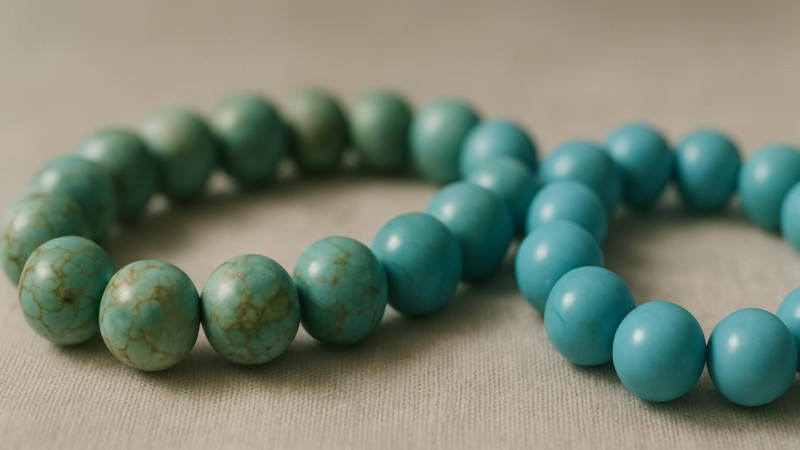
Understanding the Allure of Turquoise
Turquoise has captivated artisans, collectors, and jewelry lovers for centuries. Its distinctive blue-green color and rich cultural history make it one of the most sought-after gemstones in the world. From ancient Egyptian adornments to Native American craftsmanship, turquoise has been treasured both for its beauty and its symbolic meaning. However, in today’s market, not all turquoise is natural — some stones are dyed or treated to enhance color and durability. Knowing how to distinguish dyed turquoise from natural untreated turquoise can help you make informed decisions when selecting beads, cabochons, or finished jewelry.
Why Turquoise Is Often Treated or Dyed
Natural turquoise is relatively soft, ranging from 5 to 6 on the Mohs hardness scale. It’s porous and can absorb oils, moisture, and even dyes, which alter its appearance over time. Because of these characteristics, some manufacturers stabilize or dye turquoise to improve its color and durability. While treatments are common and not inherently deceptive, undisclosed dyeing or imitation practices can mislead buyers who believe they are purchasing untreated, natural stones.
Common Types of Turquoise Treatments
- Stabilized Turquoise: Impregnated with resin or polymer to strengthen and preserve the color.
- Dyed Turquoise: Enhanced with artificial colorants to intensify or alter its hue.
- Reconstituted Turquoise: Made from powdered turquoise mixed with resin and molded into solid forms.
- Imitation Turquoise: Non-turquoise materials (such as howlite or magnesite) dyed to mimic the look of turquoise.
Visual Clues: How to Spot Dyed Turquoise
Identifying dyed turquoise requires a combination of keen observation and a bit of gemological insight. Below are practical ways to distinguish between dyed and natural stones.
1. Examine the Color
Natural turquoise exhibits subtle color variations — from sky blue to greenish-blue — often with uneven distribution. Dyed stones, on the other hand, tend to display unnaturally uniform coloration. If the stone looks overly bright, neon-like, or too consistent, it may have been dyed. Compare the stone’s shade to other natural materials, like amethyst beads, to appreciate how natural hues typically vary under light.
2. Look for Dye Concentration
Check crevices, drill holes, or surface cracks for darker color buildup. Dye tends to accumulate in porous areas, leaving telltale spots that natural turquoise wouldn’t have. Gently inspect the edges of drilled holes in turquoise beads — you might notice darker rings or color bleeding, a sign of dye treatment.
3. Assess the Matrix Pattern
The matrix — the web-like or blotchy pattern of host rock within turquoise — can reveal much about authenticity. In natural turquoise, the matrix integrates smoothly with the gemstone’s body. In dyed or imitation turquoise, the matrix may look painted on or artificially enhanced. If the matrix appears too sharp, dark, or consistent, it could indicate a surface dye application.
4. Perform a Cotton Swab Test
A simple test involves lightly rubbing an inconspicuous area with a cotton swab dipped in acetone or nail polish remover. If color transfers onto the swab, the stone is likely dyed. Be cautious, as this can damage the finish — always test a small area or a single bead first.
5. Observe Under Magnification
Using a jeweler’s loupe or magnifying glass, examine the surface closely. Natural turquoise has minute pits, inclusions, and natural irregularities. Dyed or reconstituted stones often show uniform texture, resin bubbles, or unnatural sheen. Compare this observation technique to how you might study surface details on freshwater pearls to distinguish genuine nacre from coatings.
Advanced Identification Techniques
For collectors or jewelers seeking greater certainty, gemological testing offers more definitive results. Professional gem labs can analyze turquoise through spectroscopy, UV fluorescence, or infrared testing to identify the presence of dyes or stabilizers. While such testing may not be practical for casual buyers, it’s invaluable for high-value stones or vintage pieces.
UV Light Examination
Some dyed turquoise glows differently under ultraviolet light due to the chemical nature of the dye. Natural turquoise usually exhibits a weak or no fluorescence. While this method isn’t foolproof, it can provide additional clues when combined with visual observation.
Specific Gravity and Hardness
Reconstituted or resin-filled turquoise often has a lower specific gravity than natural turquoise. Additionally, the hardness may vary — natural turquoise feels slightly chalky, while stabilized or dyed stones can feel smoother due to resin coatings. Simple scratch tests should be performed only on unmounted stones to avoid damage.
Comparing Natural vs Dyed Turquoise Characteristics
| Feature | Natural Untreated Turquoise | Dyed or Treated Turquoise |
|---|---|---|
| Color | Subtle, uneven blue-green tones | Uniform or overly vivid color |
| Matrix | Natural, integrated patterns | Painted or enhanced appearance |
| Surface | Matte or slightly porous | Smooth or glossy due to resin |
| Reaction to Acetone | No color transfer | Dye may bleed |
| Fluorescence | Little to none | Possible glow under UV |
Folklore and Cultural Significance of Turquoise
Throughout history, turquoise has been regarded as a sacred stone. In ancient Persia and Egypt, it symbolized protection and divine favor. Native American tribes traditionally believed turquoise connected the wearer to the sky and brought good fortune. In folklore, it was thought to promote harmony and balance, reflecting its tranquil blue hues. While these beliefs continue to inspire jewelry design, they are part of cultural and historical traditions rather than scientific claims.
Practical Tips for Buyers and Jewelry Makers
Whether you’re a jewelry designer sourcing materials or a collector building a gemstone portfolio, understanding turquoise authenticity is essential. Here are practical tips to guide your next purchase or project:
- Buy from reputable sources: Choose trusted suppliers like PebbleBead who disclose gemstone treatments transparently.
- Ask questions: Inquire whether turquoise is natural, stabilized, or dyed. Responsible sellers will provide this information.
- Inspect before use: Examine beads or cabochons closely before incorporating them into designs with wire wrappers or settings.
- Handle with care: Avoid exposing turquoise to harsh chemicals, perfumes, or prolonged sunlight, which can alter its color.
- Store properly: Keep turquoise jewelry separate from harder stones like quartz to prevent scratches.
Distinguishing Turquoise from Look-Alikes
Several other minerals closely resemble turquoise, such as howlite, magnesite, and chrysocolla. These stones are often dyed to imitate the vibrant blue-green hue of genuine turquoise. Howlite, for example, naturally appears white with gray veining and takes dye easily. Magnesite has similar porosity and can be treated to achieve turquoise-like tones. Recognizing these materials helps prevent confusion and ensures authenticity in your collection of gemstones and jump rings for handcrafted designs.
Caring for Natural Turquoise
Natural turquoise requires gentle handling. Because it’s porous, it can absorb oils and moisture, leading to discoloration over time. To preserve its natural beauty:
- Wipe the stone gently with a soft, dry cloth after wearing.
- Avoid ultrasonic cleaners or chemical dips.
- Store in a cool, dry place away from direct sunlight.
- Use mild soap and water only when absolutely necessary, and dry immediately.
Following these care tips helps maintain the gemstone’s authentic luster and ensures that your turquoise jewelry remains as vibrant as the day it was crafted.
Conclusion: Celebrating Authentic Turquoise
Understanding the difference between dyed and natural turquoise empowers you as a buyer, maker, or collector. While treated stones can still be beautiful and functional, knowing their true nature allows you to choose materials that align with your artistic or personal values. Natural untreated turquoise carries a unique charm — a reflection of the earth’s artistry preserved over millennia. Whether you’re stringing beads, crafting bohemian earrings, or designing statement necklaces, let knowledge be your most valuable tool in celebrating the timeless allure of turquoise.
For the complete picture, read our in-depth guide:

Leave a Comment